https://www.aeverybody.com/turning-points-of-history-decisive-battles-that-shaped-the-modern-world/
If you were to name a place in European history that evokes a sense of “failure,” Sedan in the northeastern corner of France would definitely be one. For many French people, “Sedan” is a synonym for shame. The Battle of 1870 not only destroyed the glory of the French Second Empire but also completely reshaped the political landscape of Europe. Today, we won’t discuss the specific tactical details, but rather the weight of that “failure” and the historical significance it reflects.
A war destined to change the landscape
19th-century Europe was an era of nationalism and imperial rivalry. Napoleon III of the Second French Empire sought to maintain France’s power, while Prussia, under Bismarck’s leadership, was gradually moving toward unity and prosperity. Conflict between the two was almost inevitable.
The Franco-Prussian War broke out in 1870. France had initially thought it could easily suppress Prussia with its military tradition and imperial strength, but unexpectedly, Prussia, with its modern mobilization system, railway transportation, and powerful army, won victory after victory on the battlefield.
Sedan was the turning point of this battle.
The Emperor’s Failure
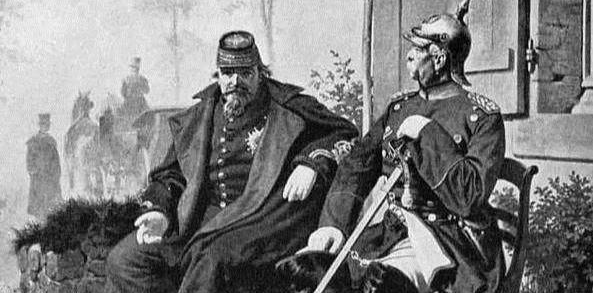
On September 1, 1870, the French army was surrounded by Prussian forces in the Sedan area. Napoleon III, personally in charge, was powerless to reverse the situation. After just one day of fighting, the French army suffered heavy casualties, ultimately surrendering nearly 80,000 men, and Napoleon III himself fell into enemy hands.
Imagine the scene: an emperor forced to surrender his sword to the enemy. This was not only a tactical failure, but also a symbolic collapse. The speed with which the French army went from glory to defeat shocked all of Europe.
For France, the psychological impact of this scene was even greater than the losses themselves. For the emperor of an empire to be captured on the battlefield was an unbearable humiliation.
The weight of failure
Why does the word “failure” become so heavy here? Because it is not just the defeat of a battle, but a turning point in the fate of the country.
For France , the defeat at Sedan led to the collapse of the Second Empire, the Paris uprising, and the establishment of the Third Republic. However, it left a deep wound in the hearts of the French people, shattering their national confidence. For decades thereafter, the lingering desire to “avenge” this humiliation directly influenced French national policy in the early 20th century.
For Germany : Prussia’s victory at Sedan paved the way for German unification, and Bismarck’s iron-blooded strategy reached its climax. The German Empire was established in 1871, becoming a new European superpower.
For the European landscape : the imbalance at Sedan laid the foundation for the long-term hostility between France and Germany, and this confrontation also deeply influenced the two world wars in the 20th century.
Sedan, then, is not just a battle but a symbol: it represents the weight of defeat that can crush an empire and change the fate of an entire continent.
Metaphors of History
From a deeper perspective, the Battle of Sedan is a metaphor about “pride and reality”.
Before the war, France overestimated its own strength and underestimated the rise of Prussia. Napoleon III relied too heavily on nominal prestige and failed to grasp the rhythm of modern warfare. From railway deployments to superior artillery and general staff systems, Prussia’s every move was more modern and calmer than France’s.
This failure tells us that when a country is immersed in the glory of the past and turns a blind eye to the changes in reality, failure is only a matter of time. Sedan is the best example of this blindness.
Persistence after failure
The most amusing thing is that the French never forgot Sedan. Instead, they held the name as a thorn in their side. After 1871, France was obsessed with revenge, especially over the territories of Alsace and Lorraine, which fueled their fury. Decades later, this passion erupted, leading directly to World War I.
In other words, the failure at Sedan did not disappear with the end of the empire. Instead, it was like a bomb buried underground, waiting to explode again.
What does failure bring?
From today’s perspective, the Battle of Sedan offers complex lessons. Failure isn’t a formidable task, but how one faces it is crucial. After Sedan, France chose to rebuild and persevere. Despite many setbacks, France ultimately remained a significant force in Europe throughout the 20th century.
On the other hand, while Prussia’s victory was glorious, it also sowed hidden dangers. The rapid expansion of the German Empire after unification sparked tensions throughout Europe, ultimately leading to a larger war. In other words, the victory at Sedan also carried weight, setting the victors on a different, more dangerous path.
Therefore, failure may be a test that forces a nation to redefine itself, while victory can sometimes become a trap for arrogance.
Summary : Echoes of History
More than 150 years have passed since the Battle of Sedan, but the weight of defeat still resonates in history. For the French, it was a humiliation and a wake-up call; for all of Europe, it marked a watershed that fundamentally changed the landscape of the 19th and 20th centuries.
Perhaps we can understand it this way: failure is not the end, but the starting point of another history. The metaphor of Sedan reminds us to face the cost of failure, but also to remember that failure can also give birth to new strength.
When we mention Sedan again, we shouldn’t just remember the defeat that day, but also recognize the complex resonances deep within history. Failure carries weight, but history never stops at the moment of failure.
https://www.aeverybody.com/turning-points-of-history-decisive-battles-that-shaped-the-modern-world/