https://www.aeverybody.com/decisive-european-battles-the-crucible-of-vienna-the-marne-and-verdun/
The Battle of Vienna in 1683 can be considered a monumental watershed in European history. Without it, the landscape of Europe today might be completely different. Some even say that the blood and fire of those few days under the walls of Vienna determined the course of Western civilization. This may sound a bit exaggerated, but if we zoom in a little, we see that it truly deserves the title of “the war that changed Europe.”
The fate of a city
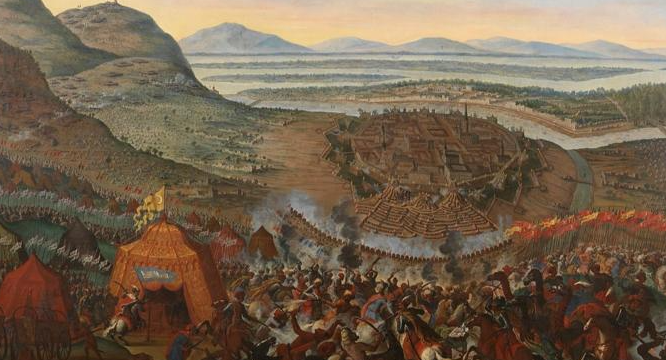
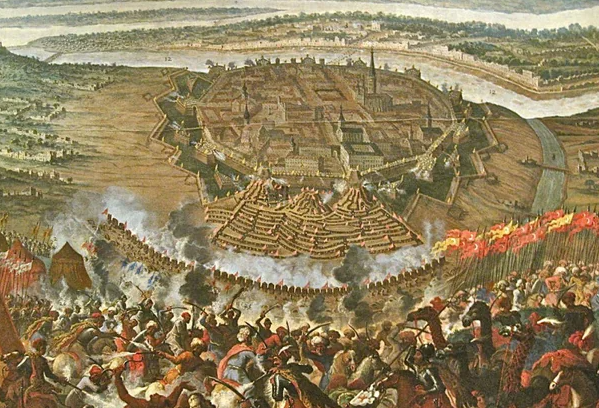
The story unfolds in the late 17th century, during the peak of the Ottoman Empire’s expansion. They had already made their first foray into Vienna in 1529, a failed siege that had resonated throughout Europe. By 1683, the Ottomans had returned, this time with even greater force and vigour, seemingly determined to completely open the door to Central Europe.
What was Vienna then? It was more than just a city; it was the heart of the Habsburg Empire and a barrier between East and West in Europe. If Vienna had fallen, the Ottomans might have continued their march toward the Danube River and beyond. For Europe, this wasn’t just a siege; it was a test of civilization and survival.
The last stand on the city wall
Vienna was in a precarious position. Food was scarce, the defenders were outnumbered, and the Ottoman siege was highly professional, with engineers digging trenches and setting up artillery day and night, ready to storm the city walls at any moment.
In this desperate moment, Vienna’s defenders chose to hold out. Citizens and soldiers alike fought tooth and nail to protect the city. The feeling of isolation and helplessness, viewed through today’s lens, feels like a war film: those within watched the walls crumble, one by one, only able to repair and resist.
Meanwhile, the Habsburgs and the Kingdom of Poland were urgently working together to form a rescue force, but everyone knew whether they could arrive in time was a question mark.
Dawn of the Winged Hussars
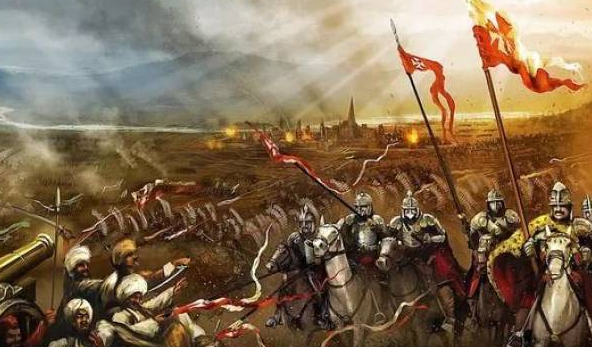
The most legendary moment of the Battle of Vienna occurred on the morning of September 12, 1683, when Polish King John III Sobieski arrived at the battlefield with his Winged Hussars. These cavalry, renowned for their heavy armor and feathered wings, were a remarkable spectacle in European military history.
At the decisive moment, they charged down the hillside in full force, their hooves thundering, their spears flying like a forest. For Vienna’s defenders, exhausted after months of hard fighting, this scene seemed like a miracle. The Ottoman offensive was instantly broken, and the besieged city finally saw a glimmer of hope.
This cavalry charge is considered to be the largest and most spectacular cavalry assault in history, and has become a legendary scene in European military history.
Meaning beyond battle
Many people ask: Why is the Battle of Vienna considered so important? Ultimately, it is because it represents a turning point in civilization.
If Vienna had fallen, the Ottoman Empire could have expanded further into the heart of Central Europe, fundamentally altering Europe’s political, religious, and even cultural landscape. In other words, the “Europe” we know today might have been completely different.
After this battle, the Ottoman Empire’s expansionary momentum began to reverse, and Europe gradually entered the process of modernization. Some even say that this battle not only saved Vienna, but also saved the future of Western civilization as a whole.
Echoes of History and Europe Today
What relevance does the Battle of Vienna have for Europe today? Its influence is evident. First, it taught Europeans the importance of unity. Poland, Austria, and Germany formed a temporary “Holy Alliance” to save Vienna at a crucial moment. This spirit of transnational cooperation later influenced Europe’s sense of community in the face of external threats.
Secondly, it profoundly shaped the concept of “European borders.” Vienna wasn’t just the Habsburg capital; it became the gatekeeper of Western civilization. This notion continues to this day, even finding its way into contemporary European identity.
Ultimately, it teaches us that history is determined by crucial moments. Had the Vienna Wall held out for just one more day or just one less day in 1683, the outcome could have been completely different. This intertwining of historical contingency and inevitability fills us with profound emotion as we reflect on it today.
From the past to the future
The Battle of Vienna is not a simple “winner takes all” story, but a reminder that the survival of civilizations often depends on seemingly fortuitous moments. Today’s Europe is diverse and modern, but the memory of 1683 remains buried deep within its foundations.
This battle is not telling us about the “justice of war”, but reminding us that when facing challenges, unity and perseverance are far more important than division and retreat.
So, as we walk the elegant streets of Vienna today, admiring its opera houses, cafés, and Baroque architecture, let us not forget the soldiers and citizens who fought to the death on the city walls over 300 years ago. Their perseverance not only shaped the fate of Vienna, but also shaped today’s Europe.
Summarize
The Battle of Vienna was a story written in blood and fire, but it also left behind hope and a future. It was that miracle of defending the city and rushing to its aid that gave Europe the opportunity to forge its own path.
Looking back today, it is not just an ancient battle, but a mirror that reminds us that history is not a relic sealed in a museum, but lives in us every day.
https://www.aeverybody.com/decisive-european-battles-the-crucible-of-vienna-the-marne-and-verdun/