https://www.aeverybody.com/the-pivotal-battles-of-the-american-civil-war-antietam-and-gettysburg/
When people talk about the American Civil War (1861-1865), they often think of the Battle of Gettysburg, but there was an equally crucial battle in the early days of the war — the Battle of Antietam. Not only was this battle a significant victory for the Union Army, but it also paved the way for one of the most symbolic acts in American history: the Emancipation Proclamation.
So why was this battle so important? How did it change the course of the war? Let’s take a closer look at this bloody but decisive clash.
Background: A Stalemate in the Early War Years
After the outbreak of the Civil War, the first few years were marked by a relatively stalemated situation on the battlefield. The Confederate Army, led by Southern commanders, had the advantage in defense, while the Union Army was in an offensive posture, trying to break the deadlock.
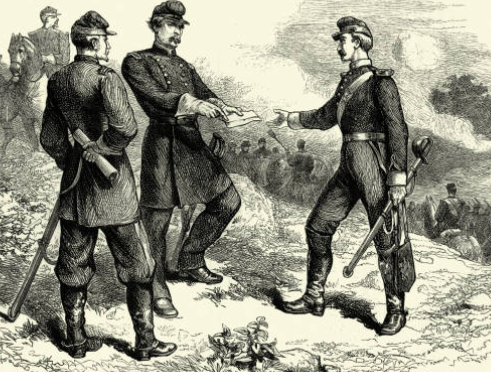
In the fall of 1862, Union General George McClellan decided to launch a decisive offensive. His goal was to destroy the Confederate Army’s fighting force and break the stalemate of the war.
The Battle Begins: Rising Tensions
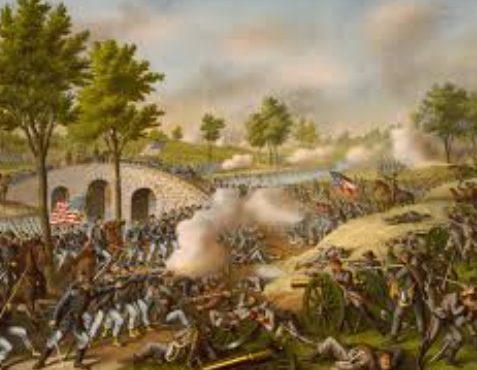
The battle was fought near Antietam Creek in Maryland, a location of strategic importance. This area was a key point for the Confederate Army’s advancement into Northern territory. Gaining control of this position would mean taking the initiative in the war.
Confederate General Robert E. Lee led the Southern army across Maryland, hoping not only to destroy Union morale but also to pressure the Northern government to seek peace. However, McClellan swiftly mobilized the Union forces and engaged Lee’s army at Antietam.
The Battle’s Progress: A Bloody Confrontation
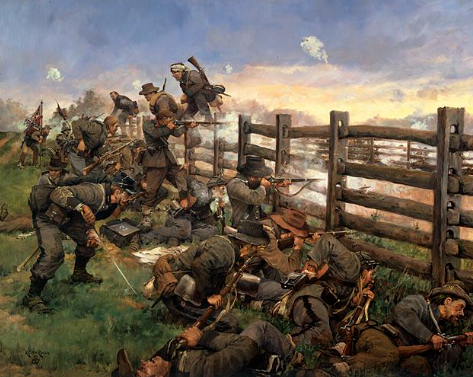
The Battle of Antietam was intense and relentless, with hardly any pauses in the fighting. Approximately 87,164 Union soldiers and 38,000 Confederate soldiers were involved in this bloody confrontation. The battle raged from the early morning until evening.
The combat took place at extremely close quarters, with troops fighting at point-blank range. It can be said that the Battle of Antietam was one of the bloodiest battles in American history. Despite the Union Army’s numerical and equipment advantage, McClellan’s over-cautious strategy allowed the Confederate forces to resist fiercely, and they even managed to push back Union forces in some areas.
One of the most brutal tactics employed during the battle was the “human wave” approach, where soldiers did not retreat despite being under heavy fire, but instead launched direct assaults, resulting in massive casualties.
The Outcome: Mixed Victory and Defeat
Ultimately, the Battle of Antietam did not have a clear victor. While McClellan’s Union forces gained some ground, pushing Lee’s army back, McClellan’s cautious nature meant he missed the opportunity to completely destroy Lee’s forces. As a result, the Confederate Army was able to retreat back to the South.
However, from a political standpoint, the Union’s “victory” was crucial. Although McClellan didn’t annihilate Lee’s army, the battle was seen as an important symbolic win, especially in the political context.
The Emancipation Proclamation: A Historic Turning Point
Following the battle, President Abraham Lincoln was in a position to issue the Emancipation Proclamation. With the “victory” at Antietam, Lincoln felt he had the moral and political grounds to free the slaves in the Southern states. While the Emancipation Proclamation did not immediately free all enslaved people, it marked a pivotal shift in the war’s objective, providing the Union with the moral high ground and further weakening the Southern economy.
The war, which had initially been about preserving the Union, now took on a more profound and morally justifiable cause: the abolition of slavery. The Proclamation gave the Union a greater sense of purpose, and it also garnered international support for the Northern cause.
Conclusion: The War’s Deeper Meaning
While the Battle of Antietam didn’t provide a decisive military victory, it proved to be a strategic and political turning point. The battle dealt a blow to Confederate morale and laid the groundwork for the Union’s eventual victory in the war.
The significance of the battle goes beyond just the military confrontation. It illustrates the harsh and brutal nature of war, while also showing how war can be a tool for social and political change. The Emancipation Proclamation, born from the aftermath of this battle, became a milestone in the fight against slavery and a turning point in American history.
As we reflect on the Battle of Antietam, we not only remember the soldiers who sacrificed their lives but also consider the deeper lessons about the nature of war and its impact on society. War brings pain and suffering, but it can also drive historical change and shape the future.
The Battle of Antietam reminds us that sometimes the most significant changes in history are forged in the heat of battle, and the costs of war are paid not only in blood but in the transformation of a nation.
https://www.aeverybody.com/the-pivotal-battles-of-the-american-civil-war-antietam-and-gettysburg/