https://www.aeverybody.com/the-ultimate-guide-to-world-war-ii-turning-points-decisive-battles-that-shaped-history/
On December 7, 1941, the world witnessed a turning point that no one could forget. Japan suddenly launched a surprise attack on the United States’ Pearl Harbor, igniting the Pacific theater of war and intensifying the already raging World War II. This attack not only changed the fate of the United States but also escalated the war to unprecedented levels.
Today, let’s dive into this shocking event, “The Attack on Pearl Harbor,” and see how it reshaped history and why it marked the true beginning of global warfare.
1. The Surprise Attack: A Devastating Strike
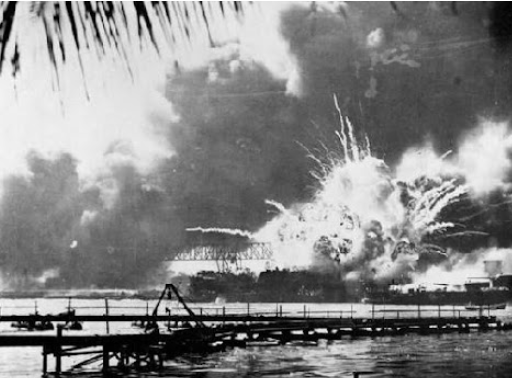
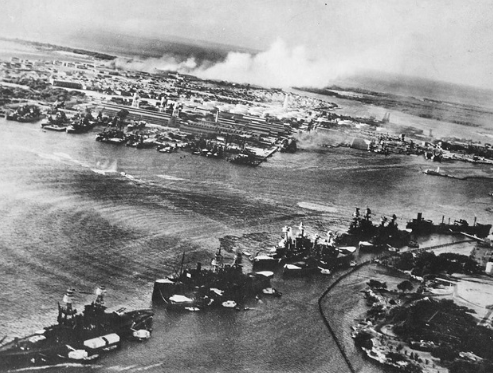
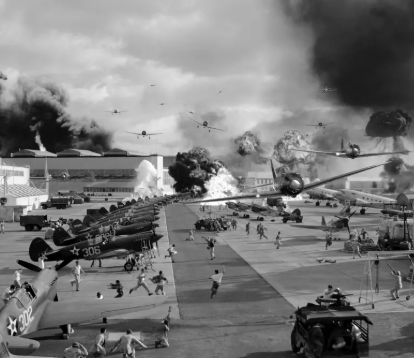
The attack on Pearl Harbor was a total shock—it was swift, calculated, and devastating. On the morning of December 7, Japan’s navy sent nearly 400 planes in two waves to strike the Hawaiian military base. The targets were clear, and the operation was executed with precision. Explosions, smoke, and fire filled the air, and Pearl Harbor was left in chaos. Although the US Navy’s main fleet was stationed at the base, the attack caught them off guard, leaving them unable to retaliate effectively.
The damage was catastrophic—many ships and aircraft were destroyed, and over 2,400 American soldiers lost their lives. The military base was nearly incapacitated, and the US Navy and Air Force suffered severe blows. Many wondered if the attack would push the United States into a military crisis in the Pacific.
2. America’s Reaction: Shock and Fury
After the attack, the entire United States was in shock and fury. The idea that their largest naval base had been easily attacked by an enemy was hard to accept. President Franklin D. Roosevelt immediately convened an emergency meeting and then delivered his famous “A Day of Infamy” speech.
In his speech, Roosevelt stated, “December 7, 1941, will be a date that lives in infamy,” and swiftly pushed for a declaration of war against Japan. On December 8, Roosevelt formally asked Congress for a declaration of war, which was supported. Under Roosevelt’s leadership, the United States fully committed to joining World War II and launched an all-out retaliation against Japan. America’s entry into the war significantly changed the global balance of power.
3. Japan’s Strategic Miscalculation: A Costly Mistake
Japan’s motive for the Pearl Harbor attack was to destroy the US Pacific fleet, giving them time to expand in Asia and disrupt America’s involvement in the Pacific theater. However, while the attack was tactically successful, it failed to achieve its strategic objectives.
Firstly, Japan did not destroy the US aircraft carriers, which were a crucial component of the US Navy’s power in the Pacific. Furthermore, the oil reserves and repair facilities at Pearl Harbor were largely untouched.
Most importantly, the attack did not weaken America’s resolve but instead made the United States even more determined to fight back. Far from deterring the US, the attack galvanized the nation, and America’s military response was swift and decisive. The attack on Pearl Harbor was a significant strategic error for Japan, leading them into a long and ultimately unsuccessful war in the Pacific.
4. Pacific War: America’s Strong Counteroffensive
After Pearl Harbor, the United States did not fall into defense mode but launched a powerful counteroffensive. They quickly rebuilt their navy and air force and began a series of attacks. The Battle of Midway in 1942 marked a turning point in the Pacific War, where the US Navy destroyed four Japanese aircraft carriers, shifting the momentum of the war.
Subsequent battles, such as the Guadalcanal campaign and the Philippine Sea battle, saw the US Navy and Air Force gain dominance and steadily pushed closer to Japan’s homeland. By 1945, the US not only defeated Japan’s navy but also successfully dropped atomic bombs, forcing Japan to surrender.
5. The Legacy of the Pearl Harbor Attack
The attack on Pearl Harbor was not only a military blow but also a pivotal moment that had far-reaching effects. It exposed significant flaws in American intelligence and defense systems, highlighting the importance of being prepared for unexpected crises. The United States took these lessons to heart, investing heavily in strengthening their defense and intelligence capabilities, ensuring that a similar surprise attack would not happen again.
The attack also solidified America’s military presence on the world stage. From that point on, the US became a dominant global military power, influencing global affairs and engaging in Cold War conflicts like the Korean War and Vietnam War.
6. Conclusion: The Far-reaching Significance of the Attack
The Pearl Harbor attack was a sudden disaster that, paradoxically, gave the United States a new opportunity. It forced America into World War II and shifted the balance of power globally. From that moment onward, World War II entered a new phase, with the US emerging as a major military and political leader in the world.
The attack on Pearl Harbor is not just an event in war history; it serves as a reminder of how important it is to face crises with courage and composure. It also demonstrates the resilience and strategic thinking of a nation, from shock to victory, underpinned by unyielding determination.
Looking back at Pearl Harbor, we must not only remember the past but also learn from it to prevent similar tragedies in the future.
https://www.aeverybody.com/the-ultimate-guide-to-world-war-ii-turning-points-decisive-battles-that-shaped-history/