https://www.aeverybody.com/naval-warfare-from-trafalgar-to-incheon/
When talking about the Korean War (1950-1953), if you had to pick one battle that was particularly decisive, it would definitely be the Incheon Landing. This battle directly turned the tide of the war, and many military historians have remarked that it was nothing short of a “miraculous” strategic comeback.
1. Pre-Battle Situation: Desperation in Crisis
Let’s first look at the situation before the battle. In June 1950, the Korean War broke out. North Korean forces surged southward, quickly capturing two-thirds of the Korean Peninsula. The support from the United States and United Nations forces was delayed, and South Korea was on the brink of collapse. By August, the United Nations forces, aided by the U.S., were pushed into a small area around Busan, known as the “Busan Perimeter.” If things kept going this way, South Korea was as good as lost.
At this point, you might be thinking, how desperate was the situation? The North Korean forces had overwhelming strength, and the United Nations had almost no chance to counterattack. But it was at this most critical moment that a bold plan was about to change the course of the war.
2. The Plan: Strategic Layout of the Incheon Landing
The key to turning the tide was a daring strategy proposed by General Douglas MacArthur, who was the Commander-in-Chief of the United Nations forces at the time. MacArthur decided to launch a landing operation on the flank of the North Korean army, targeting Incheon, a port city near Seoul.
Why Incheon? The choice seemed risky, as Incheon’s geographical conditions were quite complex, with significant tidal changes, and there were many enemy defenses surrounding the area. But MacArthur knew that Incheon was strategically located close to North Korea’s rear. If the landing succeeded, it could cut off North Korea’s supply lines and directly threaten their rear, diverting their attention and creating an opportunity for a counteroffensive.
More importantly, the Incheon Landing could quickly provide crucial support to South Korea, turning the tide for the United Nations forces. So, this landing was not just a tactical move; it was a high-stakes strategic gamble.
3. The Landing: Perfect Execution and Initial Challenges
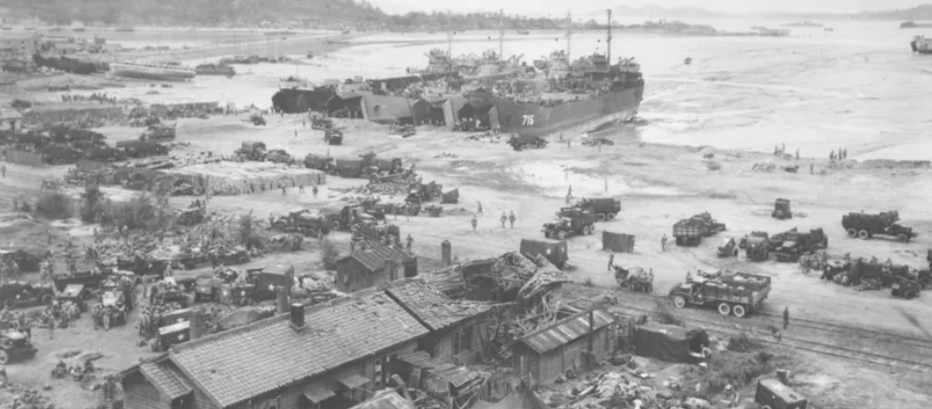
On September 15, 1950, the United Nations forces launched this historic large-scale landing operation. Around 70,000 U.S., South Korean, and other United Nations troops stormed the beaches in a massive amphibious assault, breaking through North Korean defenses and successfully landing at Incheon. To support the landing, the United Nations forces carried out large-scale air and naval bombardments, creating significant psychological pressure on the enemy.
However, despite the huge scale of the operation and the meticulous preparation, it wasn’t smooth sailing. The conditions of Incheon’s port were complicated, and the timing of the landing was critical due to the tides. Moreover, North Korea did not underestimate the operation, as they had strong defensive positions around Incheon. The initial landing was met with fierce resistance, especially on the first day, when the fighting was intense.
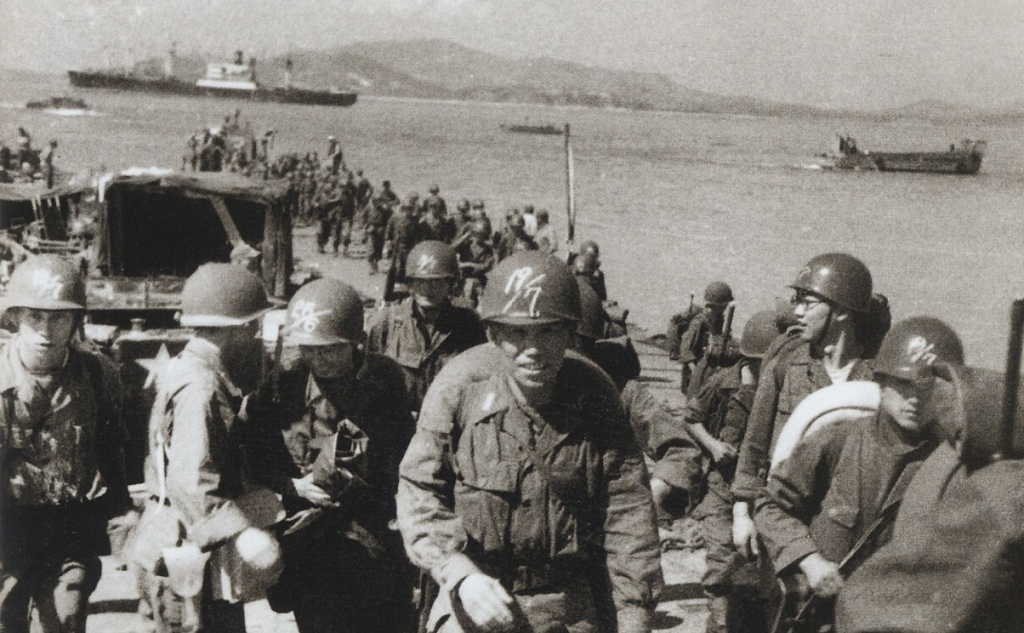
4. Turning Point: The Shift in the Battle and Glimpse of Victory
After the successful landing at Incheon, North Korea’s supply lines and rear positions began to disintegrate, and the situation gradually shifted in favor of the United Nations forces.
Building on the success at Incheon, the United Nations forces pressed on, quickly capturing Seoul and relieving the pressure on the Busan Perimeter. At the same time, North Korea’s main forces were forced to disperse, unable to concentrate their strength for a sustained offensive.
With the United Nations forces advancing, North Korea not only lost its capital, but its strategic initiative was severely diminished. This successful counterattack provided the United Nations with precious time and space, turning the tide of the war.
5. Aftermath: A Strategic Decision That Changed History
Once the Incheon Landing was victorious, the situation in the Korean War was completely transformed. This victory not only boosted the morale of the United Nations forces but also forced North Korean troops to begin retreating and shift to a defensive posture. More importantly, the United Nations forces gained the initiative and launched several counteroffensives in both the southern and northern regions of the Korean Peninsula.
Ultimately, the Incheon Landing provided critical support for the United Nations forces to push back North Korea and ultimately overthrow the North Korean regime, marking a significant turning point in the Korean War. The landing operation left an indelible mark in military history.
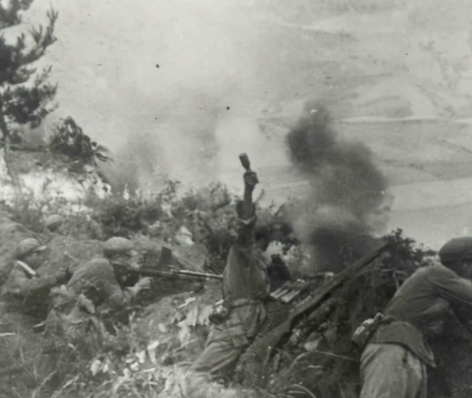
6. Conclusion: A Combination of Courage and Strategy
The Incheon Landing was more than just a military operation; it was a perfect combination of strategy and courage. In warfare, victory is determined not just by the number of troops but by the strategy, timing, and execution. MacArthur’s landing at Incheon brilliantly exploited the enemy’s vulnerabilities and employed bold tactics, with results that were nearly flawless.
For us today, this battle is undoubtedly one of the legends of military history. It shows that in the most difficult times, a well-thought-out strategy can turn the tide, even changing the course of history. As a result, the Incheon Landing remains an unforgettable victory in history.
https://www.aeverybody.com/naval-warfare-from-trafalgar-to-incheon/