https://www.aeverybody.com/the-ultimate-guide-to-world-war-ii-turning-points-decisive-battles-that-shaped-history/
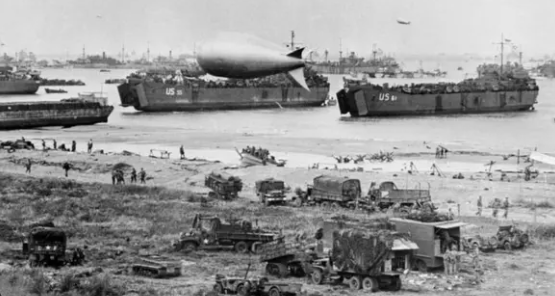
On June 6, 1944, the sands of Normandy Beach wrote one of the most pivotal pages of World War II—the Allies launched the Normandy Landing (D-Day). This operation was not only unprecedented in scale but also filled with tactical brilliance and daring. Today, let’s explore how the Allies managed to break through the heavily fortified German defenses and open the path for the liberation of Europe.
Allied Strategic Goal: Opening a Second Front
The Allies didn’t choose Normandy randomly; it was carefully planned. The goal was clear: open a second front in northwestern France to divert German forces and relieve pressure on the Soviet Union on the Eastern Front. The Allies needed to seize the beaches quickly to ensure their troops could land smoothly and advance inland.
To achieve this, the Allies devised a three-pronged landing strategy: air, sea, and ground:
Airborne forces first: On the night before the landing, paratroopers and glider-borne troops dropped behind enemy lines to cut German communications and destroy bridges and roads, clearing the way for the main landing force.
Naval artillery support: Battleships and cruisers bombarded German coastal defenses to weaken their firepower.
Main landing force: Tens of thousands of soldiers, tanks, and supplies landed by sea, established beachheads, and began moving inland.
Beach Landing Tactics: Assaulting Both Mind and Matter
The terrain of Normandy’s beaches was complex, and the Germans had fortified it with minefields, anti-tank ditches, bunkers, and machine-gun nests—essentially a death corridor. The Allies faced what was nearly a perfect killing zone.
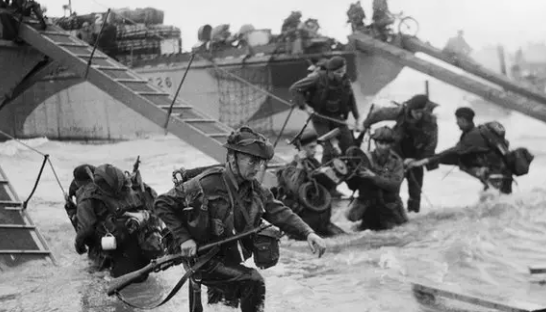
1. Soldiers Landing Through Waves
Landing craft had to deliver troops across tides, artillery fire, and beach obstacles. Soldiers carried minimal gear to move quickly through minefields. The landing tactic emphasized speed and mass—suppress German fire as quickly as possible and establish numerical superiority.
2. Role of Combat Engineers
Engineers carried explosives and tools to clear safe paths through obstacles. Without them, troops would struggle to advance through mines and defensive ditches. Normandy exemplified combined combat and engineering operations.
3. Fire Support and Cover
Naval and aerial bombardment was intended to suppress, not completely destroy, German defenses. Troops advanced under covering fire, with tanks and artillery following to provide continuous support. This staged advance minimized casualties while keeping the front line stable.

Airborne Troops: Securing Key Points
On the night before D-Day, Allied airborne units dropped deep behind enemy lines to:
Destroy bridges to prevent German reinforcements from reaching the main battle area
Cut communications to disrupt German coordination
Seize high ground to cover the beach landing
Although the airborne operations were scattered and chaotic, this very unpredictability made it difficult for the Germans to identify the main attack direction, creating significant psychological pressure. It was a perfect combination of tactical deception and dispersed attacks.
Weaknesses in German Defenses and Allied Ingenuity
Despite strong German defenses, several weaknesses existed:
Dispersed forces: German troops were deployed across Europe; Normandy was not fully manned.
Slow command response: Allied airborne operations disrupted communications, delaying German reactions.
Gaps in fire coverage: Certain beach areas were not fully covered by defensive fire, giving the Allies landing opportunities.
The Allies exploited these weaknesses, combining precise landing plans with follow-up reinforcements to ultimately breach the German defensive line.
Conclusion: Tactical Lessons from the Normandy Landing
The success of the Normandy Landing relied not only on courage but also on strategic planning and coordinated teamwork. The perfect integration of naval artillery, airborne operations, ground forces, and engineers allowed the Allies to establish a beachhead under heavy German defenses.
Looking back, several tactical principles emerge:
Disperse risk, concentrate strength: Multiple fronts created confusion for the enemy.
Support and cover: Frontline operations relied on sustained fire and logistical backing.
Exploit enemy weaknesses: Strategic analysis and psychological tactics were equally important.
The Normandy Landing was not just a turning point in WWII; it serves as a classic tactical lesson: even against formidable defenses, careful planning and collaborative execution can change the outcome of a battle.
https://www.aeverybody.com/the-ultimate-guide-to-world-war-ii-turning-points-decisive-battles-that-shaped-history/