https://www.aeverybody.com/the-pivotal-battles-of-the-american-civil-war-antietam-and-gettysburg/
When it comes to the American Civil War, many people might feel it’s a distant story. But the “United States” we know today was forged step by step through those four brutal years of brother fighting brother, bloodshed, and sacrifice. Among all the battles, the most decisive turning point was the Battle of Gettysburg.
Though fought over just three days, it became the war’s “weather vane,” marking the moment when the Confederate forces lost their chance to come back, and when America’s future truly moved toward unity and democracy. Let’s travel back to July 1863 and see exactly what happened in those three days—and why this battle shaped the nation’s destiny.
1. The Confederates March North, Confident of Victory
By 1863, the Confederacy had won some small battles but was running low on resources. So, their commander—General Robert E. Lee, known as the “Soul of the South”—made a bold move: to take the fight to Northern soil. He led his army through Maryland, deep into Pennsylvania, aiming for Gettysburg.
Why? Lee’s plan was twofold:
- On one hand, to score a big victory on Union territory and force Lincoln’s government to negotiate peace;
- On the other hand, to shake Northern morale and wage psychological warfare.
Simply put, it was a gamble: win, and the South might get a second chance; lose, and decline would be inevitable.
2. The Union Holds Steady, Defending Gettysburg for Three Days
The battle began on July 1. Lee’s 70,000-strong Confederate troops met about 90,000 Union soldiers. Early on, the South pushed the Union forces back to high ground just outside Gettysburg.
But the new Union commander, General George Meade, kept his cool. He quickly organized his troops into a strong “inverted U-shaped” defensive line, firmly holding the high ground.
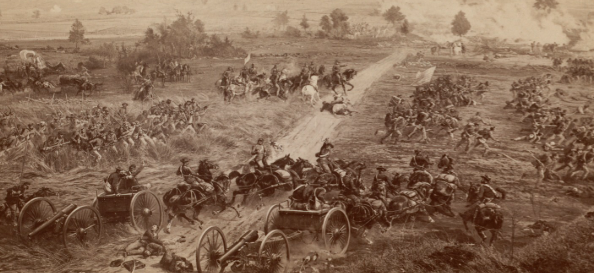
From July 2, the Confederates launched wave after wave of fierce attacks, including the famous “Pickett’s Charge” — where over 10,000 Confederate soldiers marched across open fields, only to be shattered by concentrated Union firepower.
Despite heavy losses on both sides, the Union line held firm. The South’s repeated assaults over the three days drained their strength, and they finally ran out of steam.
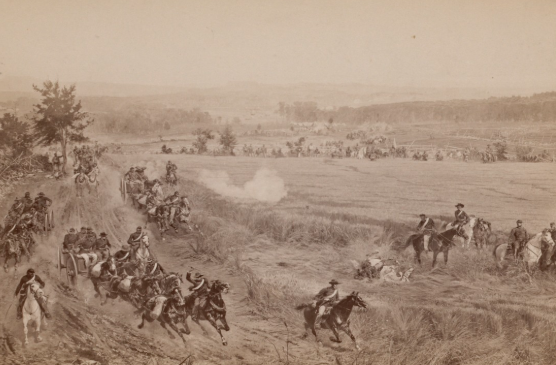
3. Three Days of Fighting, 50,000 Casualties, One Historic Turning Point
The results were clear:
The Confederates lost about 28,000 men, including many key officers, severely weakening their army;
The Union lost around 23,000 but held onto their ground, greatly boosting morale;
Most crucially, after Gettysburg, Lee’s army was no longer able to push further into Northern territory. The South lost strategic initiative and was forced onto the defensive.
Those three days marked a major turning point in the Civil War: the South shifted from offense to defense, and the North began its relentless advance toward reunification.
4. Lincoln’s Speech: Elevating Victory into a National Faith
Four months later, President Abraham Lincoln came to Gettysburg to dedicate a cemetery for the fallen soldiers. His speech lasted only two minutes and 272 words, but it became one of the most famous speeches in American history — the Gettysburg Address.
Lincoln declared: “government of the people, by the people, for the people, shall not perish from the earth.” These words were not only for the dead but for the living and the nation’s future.
He elevated the battlefield victory to a higher ideal — freedom, equality, and unity — which many see as the true “second birth” of the United States.
5. Conclusion: A Battle, a Nation Reborn
Though fought over just three days, Gettysburg was a crucial turning point in the Civil War. The Confederate army went into decline, and the Union marched steadily toward victory.
This victory was not just military; it was a pivotal moment in shaping the fate of the United States, guiding it toward a unified country and the abolition of slavery, laying the foundation for a modern democracy.
So if you ask, “How can a single battle change a nation?” Gettysburg is one of the best answers.
https://www.aeverybody.com/the-pivotal-battles-of-the-american-civil-war-antietam-and-gettysburg/