https://www.aeverybody.com/the-ultimate-guide-to-world-war-ii-turning-points-decisive-battles-that-shaped-history/
Today, let’s dive into one of the most iconic battles of World War II – The Battle of Kursk. This wasn’t just the largest tank battle in history, it was also a key turning point in the war. When we talk about the impact of this battle, it’s impossible to overlook its significance. It truly marked a pivotal moment in the course of World War II.
1. Background: Germany’s “Last Gamble”
By the summer of 1943, the situation for Nazi Germany was becoming increasingly dire. Following the Soviet victory at Stalingrad and the failure of their campaigns in North Africa, the pressure on Germany’s Eastern Front was mounting. Hitler believed that only one decisive victory could turn the tide, so he launched Operation Zitadelle, targeting the Soviet-held Kursk region. Kursk was not only a critical transportation hub between the German and Soviet forces but also a vital point for weakening Soviet strength.
However, the Soviet Union had already seen through Germany’s plans. They fortified the Kursk region early on, establishing a complex series of defensive lines. Simply put, the Germans were up against what could be called an “iron fortress” at Kursk.
2. The Battle: Tanks Collide, Firepower Unleashed
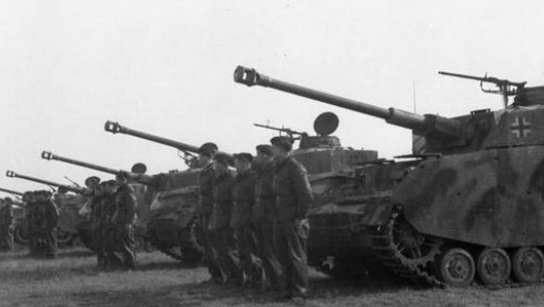
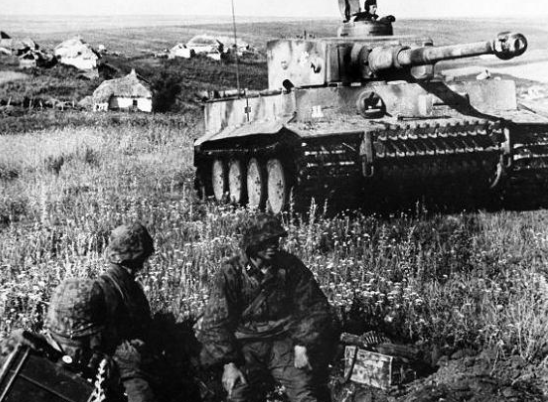
The most exciting part of the Battle of Kursk was undoubtedly the tank duel. Both sides deployed thousands of tanks. The Germans brought in their fearsome Panther and Tiger tanks, while the Soviets sent in their renowned T-34 and KV-1 tanks. This battle was nothing short of the pinnacle of tank warfare. Imagine thousands of tanks rolling across vast plains, churning up dust, and making the ground tremble with their thunderous roars.
The tank battles were fought at near point-blank range, with shells and machine gun fire saturating the battlefield. In such an intense battle, every tank crew—driver, gunner, and commander—faced the ultimate test of survival.
The most intense phase of the battle took place around Prokhorovka, where both sides deployed nearly 1,000 tanks for a colossal clash. Despite the superior technology of the German tanks, the Soviets, with their numerical superiority and more effective tactics, gradually gained the upper hand in this head-to-head duel.
3. Tactics: War of Attrition and Strategic Triumph
Although the Germans had a technological edge in tank combat at Kursk, the Soviets employed far more efficient tactics. The Soviet strategy focused on attrition—wearing down the Germans by constantly replenishing their forces and encircling their main units. This severely limited Germany’s supply lines, preventing them from maintaining a sustained offensive.
Moreover, the Soviet defenses were formidable. Not only did they build deep defensive lines around Kursk, but they also laid numerous anti-tank mines and traps. Although the Germans initially launched a fierce offensive, they could not break through the Soviet defenses due to the dense fortifications and the ever-growing Soviet counteroffensive.
4. Outcome: Germany Loses Strategic Initiative
While the Germans initially made some gains, the Soviet counterattacks grew stronger as the battle progressed. By the end of the battle, Germany suffered heavy losses—not only in tanks and equipment but also in morale. More importantly, the battle ended with Germany losing strategic initiative. From that point on, the Soviets began pushing the Germans back on the Eastern Front, forcing Germany into a defensive position.
This victory greatly boosted Soviet morale and laid the groundwork for the subsequent counteroffensives. In particular, the Smolensk and Belarus campaigns in 1944 saw the Soviets pushing closer to the heart of Germany, eventually leading to the Battle of Berlin in 1945.
5. Conclusion: A Battle that Changed History
The Battle of Kursk was not only the largest tank battle in World War II but also a pivotal battle that reshaped the direction of the war. It broke through the German defensive lines and marked the transition of the Soviet Union from defense to offense.
Today, when we talk about the Battle of Kursk, it has become a classic example in military history, illustrating the limits of tank warfare and the importance of strategy. For history buffs and military enthusiasts alike, this epic confrontation is a chapter they will never forget.
https://www.aeverybody.com/the-ultimate-guide-to-world-war-ii-turning-points-decisive-battles-that-shaped-history/