https://www.aeverybody.com/the-pivotal-battles-of-the-american-civil-war-antietam-and-gettysburg/
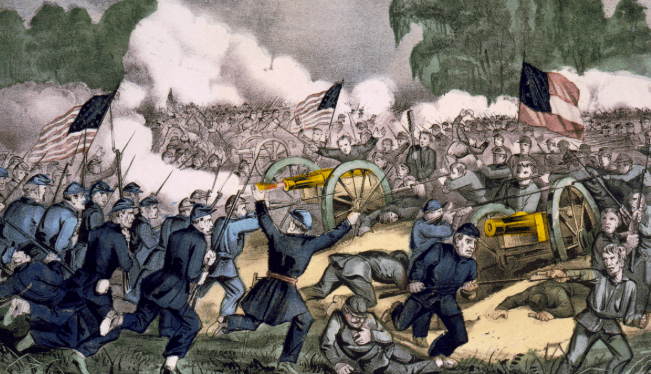
In July 1863, the small town of Gettysburg, Pennsylvania, became one of the bloodiest battlefields in American history. The three-day clash was not only a turning point in the American Civil War but also had a profound impact on the nation’s fate and military strategy. The Battle of Gettysburg was filled with courage, tragedy, and historical weight, and even today, people still revere its blood and glory.
I. Background of the Conflict
The American Civil War broke out in 1861, as the North and South clashed over issues such as slavery, economic interests, and federal authority. The Union army in the North had advantages in industry and population, while the Confederate forces in the South relied on guerrilla tactics and strong morale to conduct their operations.
In the early stages of the war, the Confederates won several victories, particularly demonstrating exceptional defensive skills at the Battle of Fredericksburg on the Eastern front. However, as time went on, the South sought to gain leverage by invading Northern territory, aiming to exhaust the North and gain diplomatic support. Consequently, General Robert E. Lee decided to lead the Army of Northern Virginia into Pennsylvania, which directly triggered the Battle of Gettysburg.
II. Course of the Battle
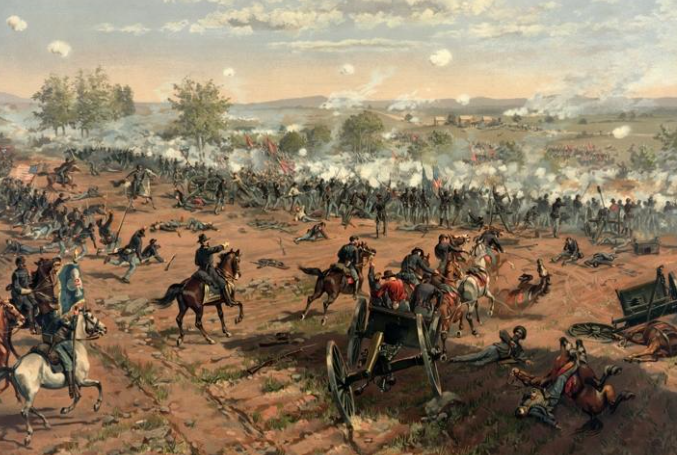
On July 1, the Confederate and Union armies first clashed near Gettysburg. The Confederates initially held some high ground, but the Union forces quickly organized defenses and received reinforcements. On July 2, the fighting escalated, with fierce daytime assaults and nighttime skirmishes. Both sides battled intensely across the town’s fields, woods, and hills. The Confederates attempted to flank the Union forces, but the Union held key positions, such as Little Round Top, successfully repelling the Confederate assaults.
On July 3, the battle reached its climax with Pickett’s Charge. General Lee launched a full-scale assault hoping to break through the Union center. However, the Union positions were well-fortified, and with heavy artillery fire, the Confederates suffered devastating losses within just half an hour. This failed assault marked the end of the Confederate advance into the North.
III. Outcome of the Battle
The Battle of Gettysburg resulted in approximately 50,000 casualties, accounting for one-tenth of all Civil War losses. Despite lasting only three days, its impact was profound:
Strategic Turning Point: The Confederate failure to advance north meant they could no longer gain a strategic advantage on Northern soil, shifting the initiative to the Union.
Impact on Morale: Union morale soared while Confederate spirits were shaken, affecting subsequent military actions.
Diplomatic Failure: The Confederacy had hoped a victory might prompt European powers to intervene in the war, but Gettysburg shattered that hope.
IV. Historical Significance and Symbolism
The Battle of Gettysburg was more than a military engagement; it became a symbol of spirit and principle. In November 1863, President Abraham Lincoln delivered a speech at the site, transforming the blood-soaked land into a symbol of freedom, equality, and national unity. He stated: “That this nation, under God, shall have a new birth of freedom—and that government of the people, by the people, for the people, shall not perish from the earth.”
Lincoln’s words not only boosted Union morale but also reminded future generations of the significance and cost of war. From a tactical perspective, Gettysburg showcased the complexity of modern warfare, where terrain, troop deployment, command decisions, and morale intertwined to determine outcomes. While the Confederates’ bravery was admirable, their tactical risks proved costly; the Union’s steadfast defense and maneuvering laid the foundation for victory.
V. Conclusion
The Battle of Gettysburg, with all its blood and glory, is etched deeply into the annals of American history. Those three days of fierce fighting represented not only the sacrifice of soldiers but also a turning point for the nation. Even decades after the war, people visit Little Round Top, Cemetery Hill, and the Gettysburg National Military Park to honor those who fought for their convictions. The battle teaches us not only about the brutal realities of war but also about the power of courage, wisdom, and resolve in decisive moments.
https://www.aeverybody.com/the-pivotal-battles-of-the-american-civil-war-antietam-and-gettysburg/