https://www.aeverybody.com/the-fall-of-napoleon-from-leipzig-to-waterloo/
When people hear “Waterloo,” they often think of a crushing defeat. But don’t forget—this was a real, stunning battle marking the final curtain for Napoleon. In this clash, European countries didn’t act alone but joined forces to launch a brilliant pincer move that completely crushed the French Empire’s ambitions for dominance.
So, how did this battle unfold? How did the countries coordinate? And how did they bring the “God of War” down from his pedestal? Today, let’s dive into this historic event that reshaped Europe.
1. Background: Napoleon’s “Return of the King” Shocks Europe!
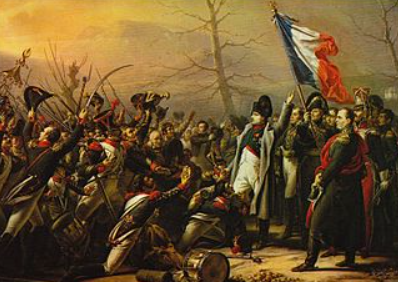
In 1814, Napoleon was first exiled to the Mediterranean island of Elba, and European powers breathed a sigh of relief. But he was not an easy opponent—less than a year later, he “escaped,” returning to France where he was welcomed by the public and military alike. He reclaimed Paris and the throne, initiating the famous “Hundred Days.”
Napoleon’s comeback threw Europe into panic. Britain, Austria, Prussia, and Russia—their old rivals—quickly formed the Seventh Coalition, determined to prevent France from rising and dominating Europe again.
2. The Battle of Waterloo: Perfectly Chosen Battlefield
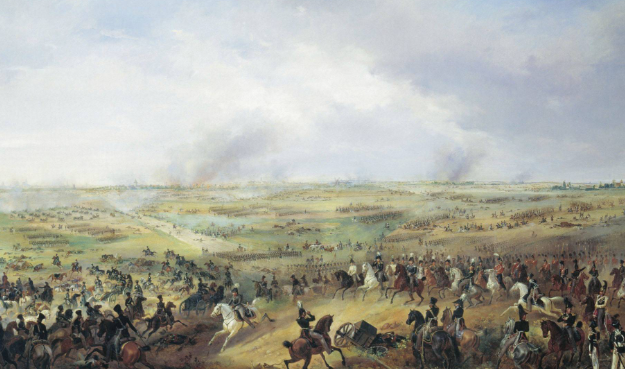
The Battle of Waterloo took place on June 18, 1815, near present-day Brussels in Belgium. The terrain was open and suitable for deploying large armies.
The combatants were:
Napoleon leading the French army, around 70,000 troops;
The Anglo-Allied army commanded by the Duke of Wellington, about 68,000 strong;
The Prussian forces under Field Marshal Blücher, around 50,000 soldiers arriving from the flank.
Napoleon’s plan was to defeat his enemies piecemeal before they could fully unite. He aimed to strike the British first and defeat Wellington before the Prussians arrived. Sounds reasonable, but as the saying goes—plans rarely survive contact with the enemy.
3. Three Key Factors on the Battlefield That Foiled Napoleon
Mud and weather worked against him
A heavy rain on the morning turned the ground to mud, slowing down Napoleon’s artillery. What was planned as an early morning attack got delayed until noon, giving the Prussians time to approach.
The British held firm; the Prussians struck from the flank, turning the tide
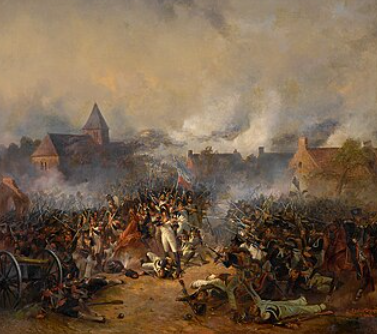
Wellington positioned his troops like an unbreakable wall to hold out for time. Repeated French attacks failed to break through. By evening, the Prussians arrived from the flank, completely disrupting the French formations.
The old generals faltered, and deputy commanders let him down
Napoleon once ruled Europe like a god, but at Waterloo, he was not in his prime. His trusted deputies, Ney and Grouchy, messed up—one charged recklessly, the other was late in support—worsening the situation.
4. How United Were the Allied Powers?
Though European powers eyed each other warily, the threat of Napoleon’s resurgence made them set aside differences temporarily and combine forces.
Britain provided strong financial support and well-trained infantry.
Prussians were decisive and crucial to the final victory.
Austria and Russia, though not fighting directly at Waterloo, kept French forces tied up on other fronts.
This rare strategic alliance combined with tactical coordination was unprecedented. It was this unity that cornered France and sealed its fate.
5. Aftermath: The Empire’s Final Fall and Europe’s New Order
After his defeat, Napoleon abdicated a second time and was exiled to the remote island of Saint Helena in the Atlantic, never to return. The French imperial dream shattered. Europe then entered the “Congress of Vienna” era, where balance of power and diplomacy maintained peace—lasting until World War I.
Since then, “Waterloo” has become synonymous worldwide with devastating defeat and turning points.
Summary
Waterloo was not just a battlefield of violence; it was a decisive contest of unity. The battle not only closed the legendary chapter of Napoleon but also gave Europe a rare moment of peace after years of warfare.
It teaches us: no matter how unbeatable you once were, if your opponents unite while you falter, you could lose everything overnight.
Waterloo was the end of Napoleon and the dawn of a new European order. History often turns dramatically at key moments—and Waterloo was exactly such a turning point.
https://www.aeverybody.com/the-fall-of-napoleon-from-leipzig-to-waterloo/