https://www.aeverybody.com/the-ultimate-guide-to-world-war-ii-turning-points-decisive-battles-that-shaped-history/
When we think of the North African theater in World War II, images of deserts, scorching sun, and dust-filled battlefields come to mind. But if we had to pick the most decisive battle of that theater, it would undoubtedly be the Battle of El Alamein in 1942. This battle not only marked the first major confrontation between the Axis and Allied forces, but it also completely turned the tide of the North African campaign.
1. Background: A Stalemate in the North African Campaign
By 1942, the situation in North Africa was chaotic. Axis forces, primarily German and Italian troops, had pushed deep into the region and were threatening British-controlled Egypt. Leading the German forces was Erwin Rommel, the “Desert Fox,” renowned for his exceptional tactics and swift maneuver warfare. Rommel had scored several victories over the British, even pushing within striking distance of Alexandria, just a short distance away from the Suez Canal.
For the British, the situation was dire. Their main force in North Africa, the 8th Army under General Bernard Montgomery, was suffering from supply shortages, low morale, and internal divisions. By the time of the El Alamein battle, British forces were on the brink of collapse.
2. The Battle of El Alamein: The Allied Counterattack
However, in October 1942, the tide began to turn. The Allies finally decided to strike, planning their counteroffensive at El Alamein, a key location that controlled the vital supply route between Cairo and Alexandria. If the Allies could secure El Alamein, they would effectively block the German advance into Egypt.
The Allied commander, General Bernard Montgomery, though not previously known for standout performance, understood the importance of this battle. Montgomery knew that a victory in North Africa would not only affect Britain’s fate but also have a significant impact on the morale of the entire Allied forces. This made the battle almost a “do-or-die” fight for him.
3. The Battle: Strategic Planning and Psychological Warfare
The success of El Alamein wasn’t a matter of luck; it was the result of meticulous planning. The Allies had a powerful intelligence network, which provided them with crucial information about the German plans. Montgomery positioned his forces behind a well-fortified defense line and adopted a strategy of “defense before counterattack”—allowing the Germans to expend much of their strength before launching a decisive counteroffensive.
The key element was psychological warfare. Although the Germans had superior numbers, the Allied defenses were much stronger than expected. Rommel initially believed the British defenses were weak, thinking they were only delaying tactics. But the Germans were taken by surprise when the Allies launched their counterattack, throwing the Germans into disarray.
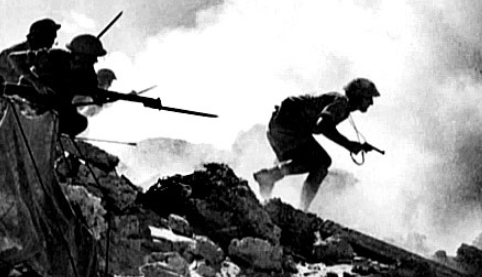
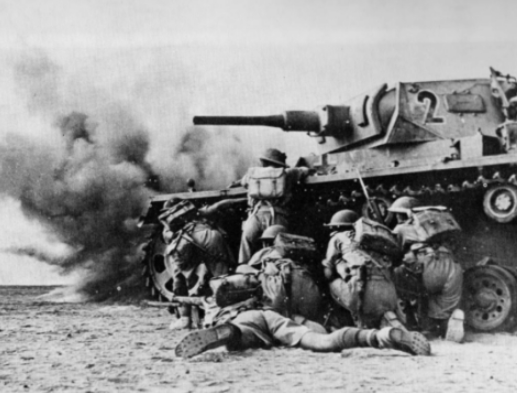
The crucial moment came on the third day of the German offensive. The Allies, using precise artillery fire and timely counterattacks, disrupted the German formations. Notably, the suppression of the German tank units slowed their advance, and they were unable to break through the Allied lines.
4. Turning Point: The German Defeat and Retreat
After several days of intense fighting, the Allies managed to halt the German advance and began their counterattack. By October 26, Rommel realized that, due to a lack of resources and troops, he could no longer match the strength of the Allies. Faced with no other option, he ordered a retreat. This decision marked the definitive Allied victory in the Battle of El Alamein.
Not only had the Allies stopped the German advance, but they also reversed the situation in North Africa. The German forces, suffering heavy losses, had to retreat, marking the first successful counteroffensive on the North African front.
5. Aftermath: A Critical Turning Point in the War
The victory at El Alamein was a milestone, not just for the North African campaign, but for the entire war. The battle provided the Allies with strategic control over the region and boosted their morale significantly. The success in El Alamein laid the foundation for future operations, such as the Italian Campaign and the Normandy Invasion, leading to ultimate victory in Europe.
The German defeat at El Alamein forced the Axis powers to retreat across North Africa, eventually leading to their surrender in May 1943. From that point on, the Allies began to steadily gain the upper hand in North Africa, which culminated in the total Axis defeat by mid-1943.
6. Conclusion: A Glorious Military Victory
The Battle of El Alamein was not just a major military victory; it was a strategic triumph. The Allies, through careful planning, psychological warfare, and a powerful counteroffensive, not only stopped the German advance but also shifted the momentum in their favor. El Alamein showed that in war, victory isn’t solely about manpower—it’s about strategy, intelligence, and courage.
For us today, the Battle of El Alamein remains a key chapter in military history. It demonstrated the power of well-executed tactics and laid the groundwork for the eventual Allied victory in World War II. The battle in the desert didn’t just change the North African campaign—it changed the course of history itself.
https://www.aeverybody.com/the-ultimate-guide-to-world-war-ii-turning-points-decisive-battles-that-shaped-history/