https://www.aeverybody.com/turning-points-of-history-decisive-battles-that-shaped-the-modern-world/
Among ancient battles, there is one that many military enthusiasts regard as a “textbook example of warfare”—the Battle of Cannae in 216 BC. This battle was not only a crucial fight in the Second Punic War but also became a classic case study in military tactics due to Hannibal’s impressive “double envelopment” maneuver.
So, what exactly happened at Cannae? And why is it hailed as the most classic encirclement battle?
1. Background: The Life-or-Death Struggle Between Rome and Carthage
In the 3rd century BC, the Roman Republic and the powerful Mediterranean state Carthage fought many battles known as the Punic Wars. During the Second Punic War, the Carthaginian general Hannibal famously led his army across the Alps deep into Italy, posing a grave threat to Rome.
The Battle of Cannae was a key engagement during Hannibal’s invasion of Italy. Rome gathered a large army aiming to decisively crush Hannibal and end the threat to the nation’s survival.
2. Hannibal’s Strategy: Using Troop Deployment to Break Rome’s Advantage
The Roman army greatly outnumbered Hannibal’s forces, nearly double in size. However, Hannibal’s superior strategic vision and knowledge of the terrain enabled him to design a perfect encirclement tactic.
His core idea was to deliberately pull back his main force, creating the illusion of weakness to lure the Romans forward. Then, his troops on both flanks would gradually close in, trapping the enemy in the middle in a “pincer movement.”
It was like using a large pair of pincers to clamp down on the opponent, leaving no escape.
3. The Battle Unfolds: A Perfect Encirclement
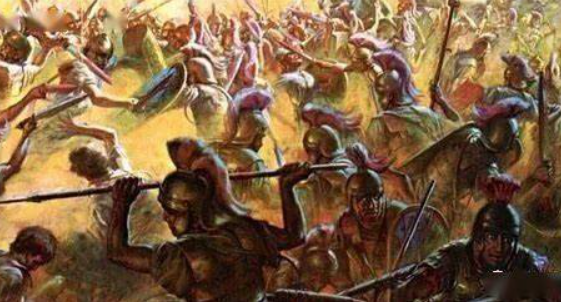
On August 2, 216 BC, the two sides clashed near Cannae in southern Italy. The Romans launched a fierce assault on Hannibal’s center, pushing it back as expected—but this was exactly Hannibal’s trap! His wing troops slowly advanced inward, tightening the pincer and enveloping the Roman forces.
As the encirclement tightened, the Romans found themselves trapped with nowhere to retreat, facing attacks from all sides. Their morale quickly collapsed.
4. Outcome and Impact: Devastating Massacre and Turning Point in the War
The Romans suffered massive losses, with historical records estimating between 50,000 to 70,000 soldiers killed—Rome’s worst military defeat. In contrast, Hannibal lost only about 6,000 men. Despite being outnumbered, he achieved a crushing victory.
This battle severely damaged Rome’s morale and military strength. More importantly, it showcased Hannibal’s extraordinary strategic brilliance, forcing Rome to rethink its war tactics to avoid future encirclements.
5. Conclusion: A Timeless Classic—The Battle of Cannae
The Battle of Cannae stands as a significant moment in ancient military history. Hannibal’s victory with a smaller force demonstrated precise assessment of relative strength, masterful use of terrain, and clever tactical design.
The encirclement cost Rome dearly and became a classic case studied by military scholars and commanders for generations. Thus, Cannae is not just a battle but a vivid lesson in warfare—teaching us how wisdom and strategy can win the day.
https://www.aeverybody.com/turning-points-of-history-decisive-battles-that-shaped-the-modern-world/